


What Does "LapBazar Certified" Mean?
Most people who buy a used laptop in Pakistan aren't afraid of buying something old. They're afraid of buying something that looks clean, works perfectly for three months, and then starts shutting down on its own.
That fear is reasonable. A used laptop can be spotless on the outside and still have a motherboard that has already failed once and been heated back to life. Nothing in the photos will tell you. Nothing in the specifications will tell you either.
LapBazar Certified exists to answer that question before you ask it. A laptop only carries the label if it has never been repaired, was imported directly rather than picked up from a local used lot, and has passed a full inspection of every component that a buyer actually depends on.
This article explains exactly what that standard covers, what each test is looking for, and why "never repaired" matters more than a longer checklist. It also explains what certification does not mean — because that part is just as important when you're comparing certified used laptops in Pakistan.
"Certified" usually means repaired. Ours means it never needed to be.
Here's something most buyers don't know. Across the industry, "certified refurbished" almost always describes a device that was broken and then fixed.
Apple is the clearest example. Every Apple Certified Refurbished product goes through full functionality testing, and any defective modules found during that testing are replaced before the unit is sold. That's a genuinely high standard, backed by a one-year warranty. But the definition is built around restoration. Something failed, something was swapped, and the result was certified.
The same logic runs through the wider refurbishment trade, where grading and reconditioning processes assume components will be replaced as needed to bring a machine up to standard.
LapBazar Certified works the other way around. We don't certify a laptop because we fixed it. We certify it because it never required fixing. If a unit needs board-level work to pass, it doesn't get corrected and re-tested — it doesn't get sold as Certified at all.
That's a narrower promise than "refurbished", and deliberately so.
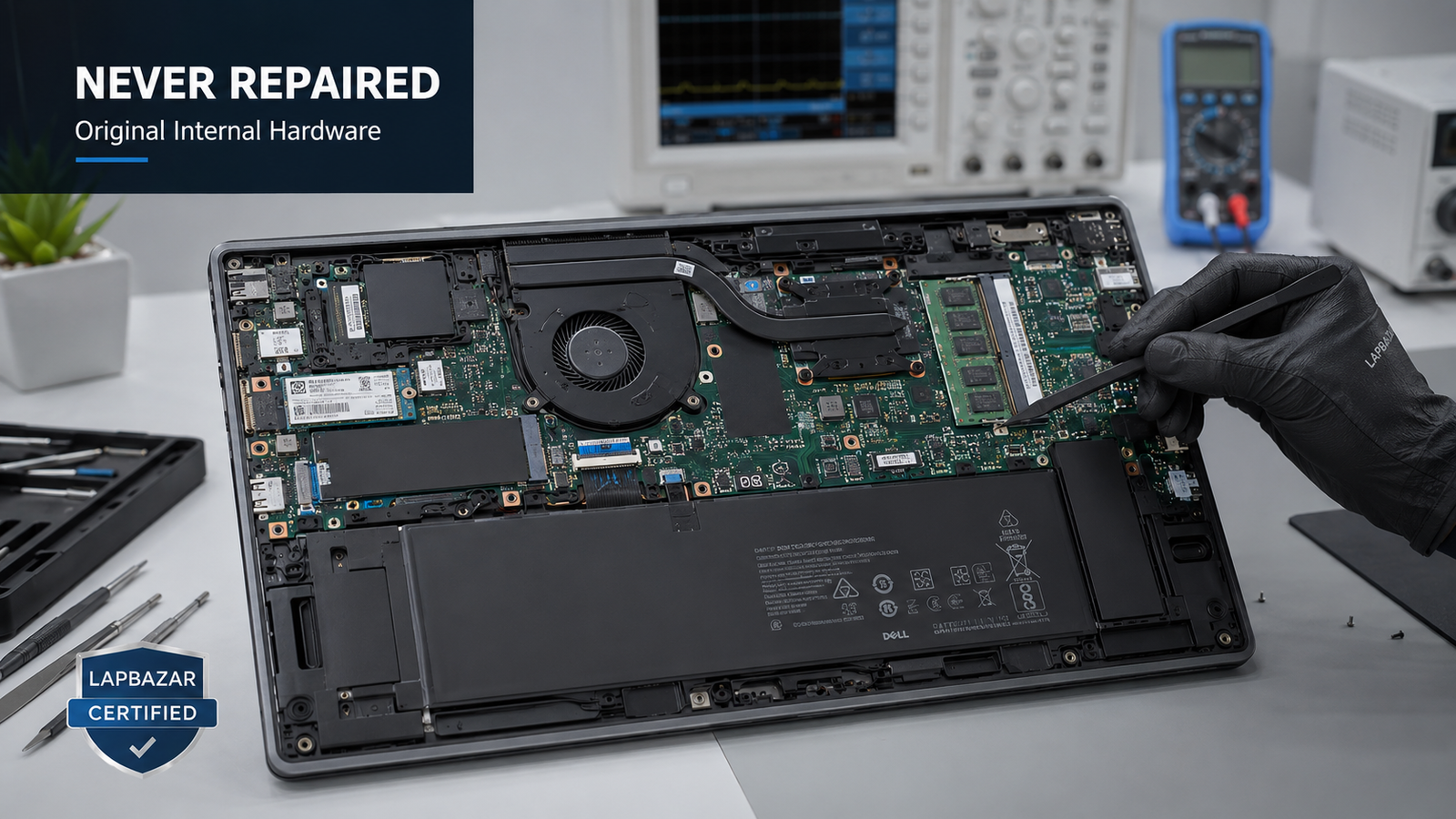
Never repaired — and why that matters more than the spec sheet
Every LapBazar Certified laptop is never repaired. That means:
- No motherboard repair
- No chip-level repair
- No major component replacement
- No refurbished units
- Original internal hardware throughout
Two i5 laptops with identical specifications and identical prices can have completely different futures, and the difference usually sits on the board rather than on the spec sheet.
What chip-level repair actually is
Modern laptop motherboards use BGA packaging — ball grid array. The processor, graphics chip and other major components sit on a grid of tiny solder balls underneath the chip, invisible once fitted. There are no pins to inspect.
When one of those solder connections cracks, the laptop starts behaving strangely: no display, random shutdowns, failure to boot. Chip-level repair means going into that layer with heat and rework equipment.
Why a reflowed board is a countdown, not a fix
There are two ways to approach it, and the cheaper one is far more common.
Reflow simply reheats the existing solder until the joints reform. It's fast and needs less equipment — but it reuses the same solder that already failed. Technicians who do this work describe reflowed chips failing again within weeks to months , especially under sustained load.
Reballing is the proper repair. The old solder is removed entirely and replaced with fresh solder balls , which can restore the joint properly when it's done well. It also takes longer, costs more, and is harder to do correctly.
You cannot tell which one a laptop received by looking at it. You often can't tell it received either. That's the honest reason we exclude repaired boards rather than trying to grade them — a repair history you can't verify isn't a risk worth passing on to a buyer.
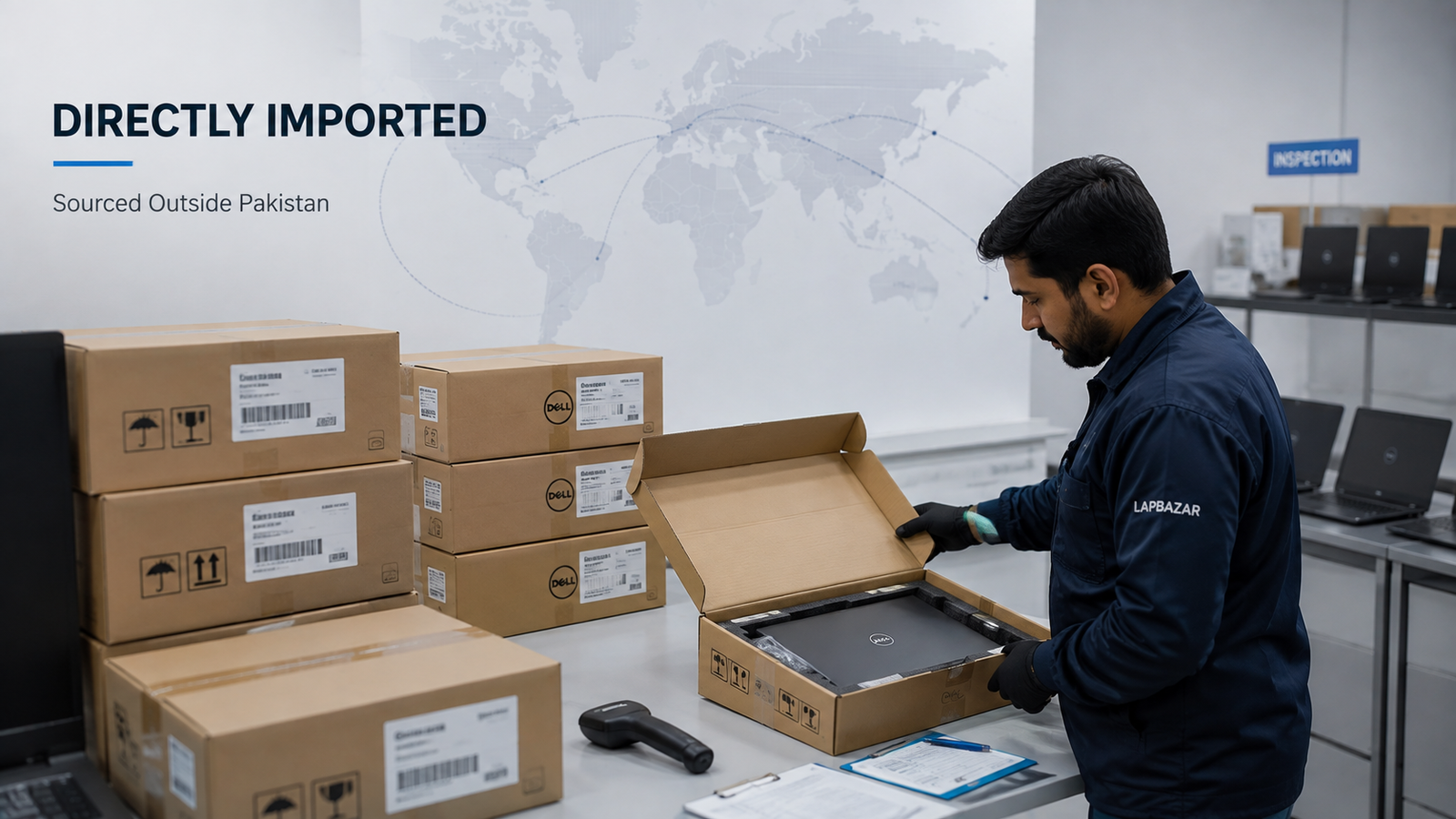
Directly imported, not sourced from local lots
LapBazar Certified laptops are imported directly from outside Pakistan. They aren't bought from local used-laptop lots.
This isn't about country of origin being better. It's about what happens to a machine between its first owner and you. A laptop that has already circulated through the local resale market may have passed through several hands, and any repair along the way leaves no paperwork behind. By the time it reaches a shelf, its history is genuinely unknown — not hidden, just gone.
Importing directly shortens that chain. We know where the stock came from and what condition it arrived in, because we log it on arrival rather than inheriting someone else's description of it. You can read more about how we work if you want the background.
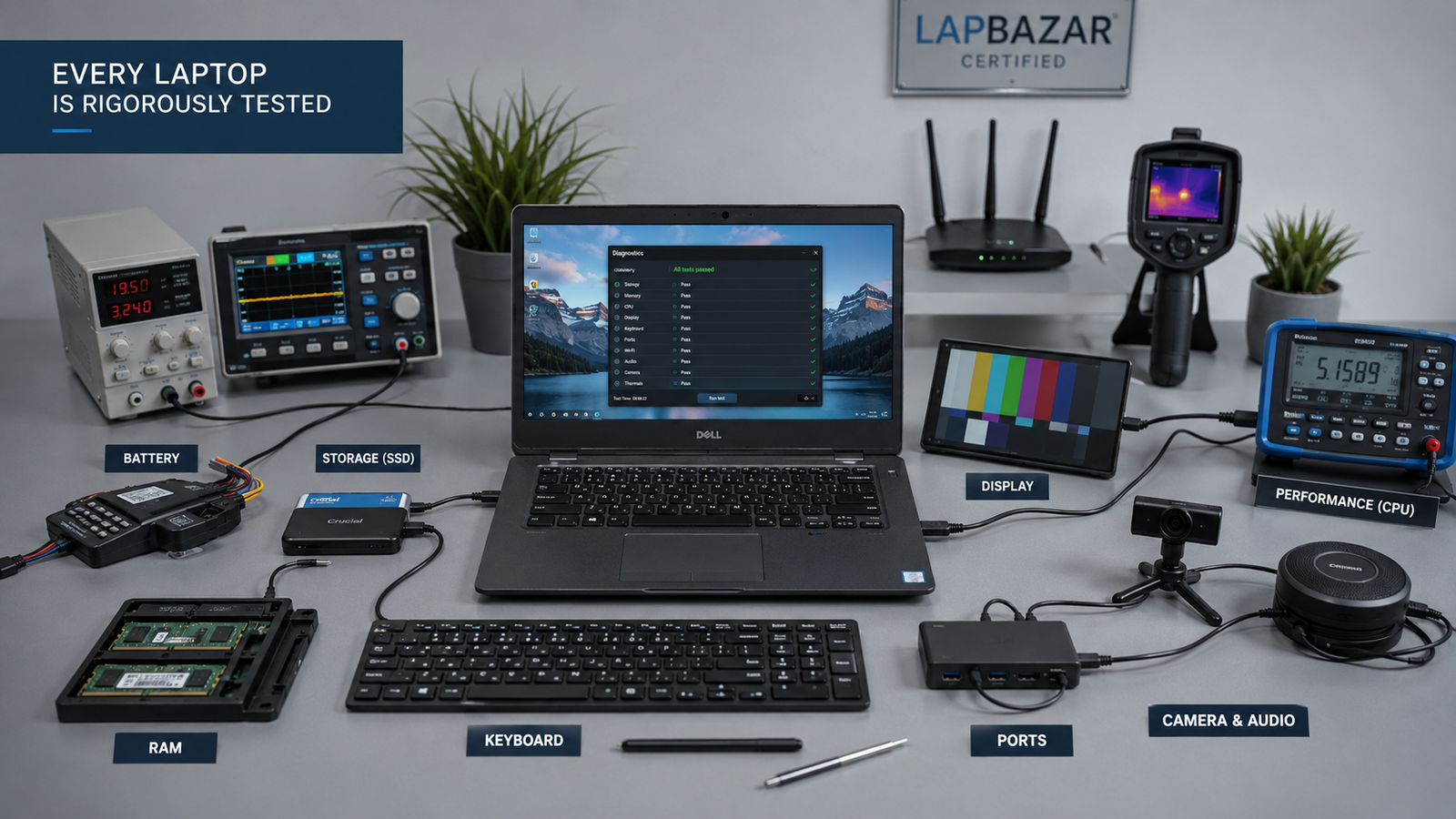
What every LapBazar Certified laptop is tested for
Sourcing decides what enters the process. Testing decides what leaves it. Every unit is checked across the following areas before it's listed.
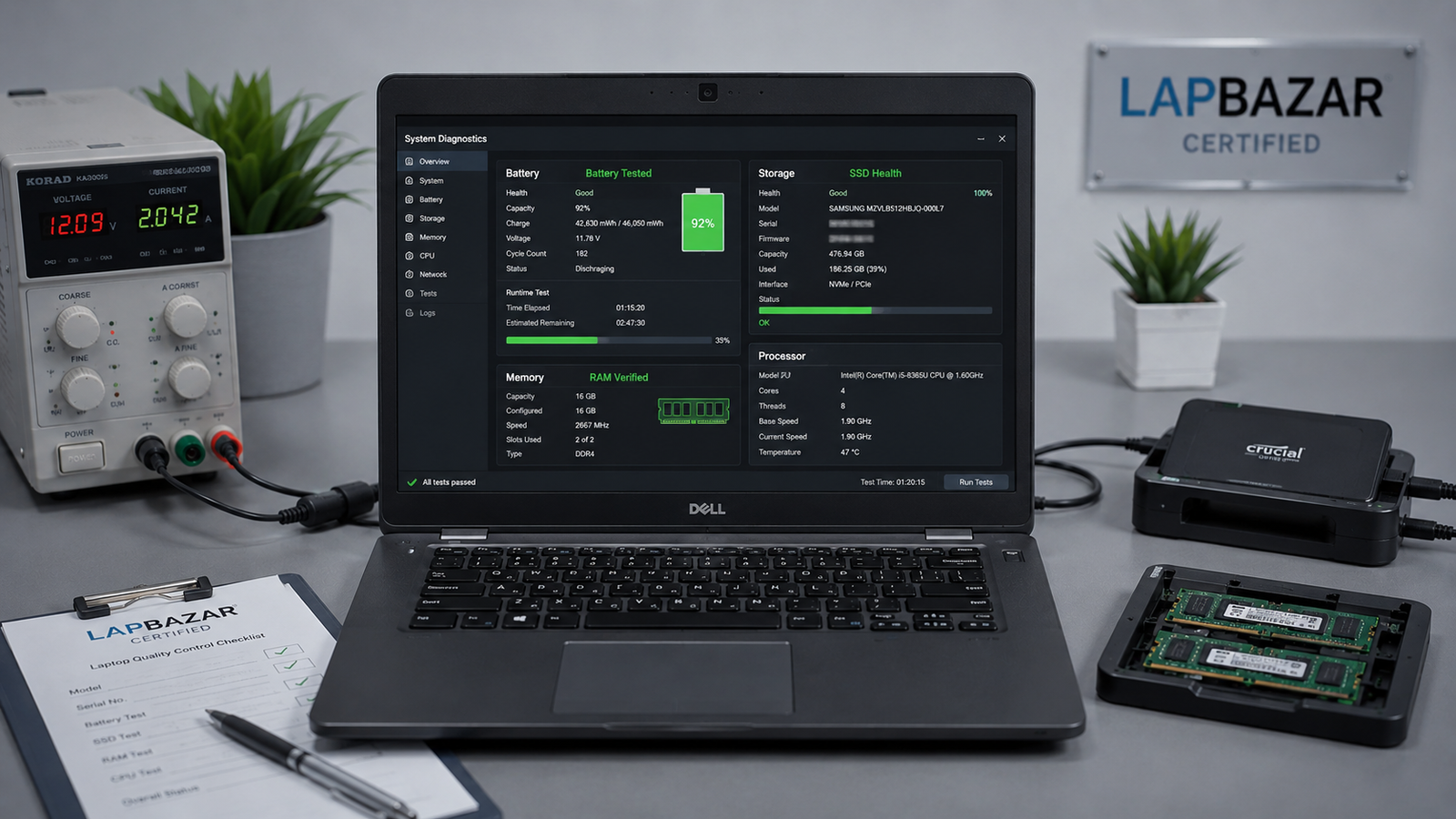
Battery, storage and core hardware
Battery performance is tested under real-world conditions against two minimum thresholds: 3.5+ hours of normal everyday use and 2+ hours under heavier multitasking. These are the floors a laptop has to clear to be certified, not a promise of what you'll personally see — your actual runtime depends on screen brightness, background apps and how hard you push the machine.
Battery health, charging and discharging behaviour are all checked alongside runtime.
Storage is tested for health status, true capacity, real performance, SMART errors and any abnormal health indicators. SMART is the drive's own self-reporting system, and it often flags a tired SSD well before the user notices anything.
The installed processor and RAM are verified against the advertised specifications and tested for stability. If a listing says 8GB and 256GB, that's confirmed on the bench rather than copied from a label.
Screen, keyboard and touchpad
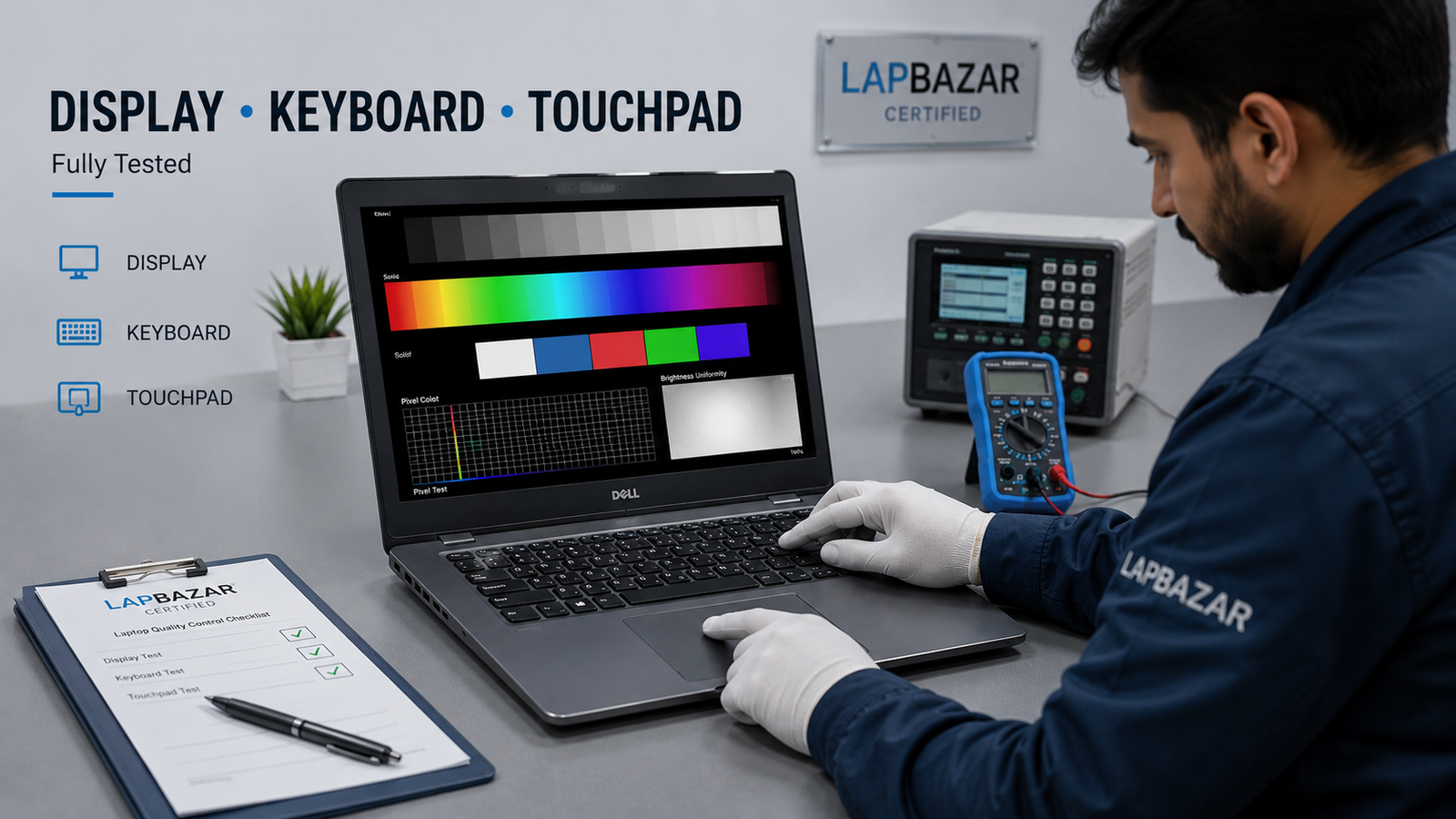
The display is checked for dead or stuck pixels, brightness, backlight behaviour, flickering, lines or spots, and touch functionality where fitted.
The keyboard is tested key by key — individual key response, double typing, stuck keys, intermittent keys, and backlight function where available. Intermittent keys are the ones that catch buyers out, because they pass a quick test and fail two weeks later.
The touchpad and TrackPoint are checked for cursor movement, clicking, scrolling and gestures.
Ports, wireless, camera and audio
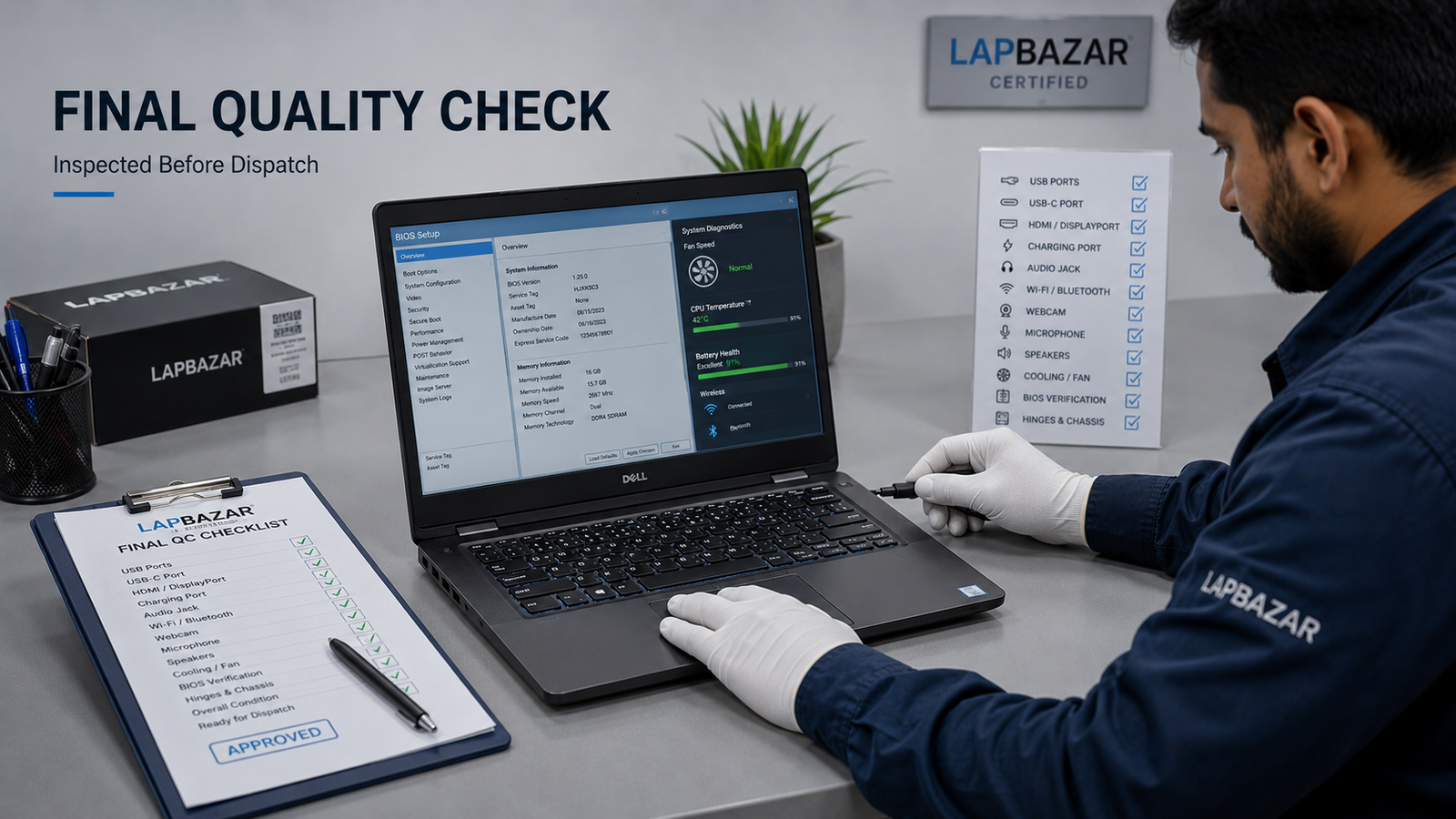
Every available port is tested individually: USB and USB-C, HDMI or DisplayPort, the audio jack, SD card reader, LAN, and the charging port. Wi-Fi and Bluetooth are confirmed working rather than assumed.
Camera, microphone, speakers and audio output are all checked — the things you only discover are broken during your first video call.
Cooling, BIOS and physical condition
The laptop is tested under sustained load for CPU and GPU temperatures, fan operation, thermal stability, performance, and any unexpected shutdowns or freezing. This is where a marginal machine reveals itself.
BIOS, serial information, hardware specifications and relevant security or lock status are verified. Ex-corporate laptops sometimes carry BIOS passwords or vendor locks that make the machine unusable, and this check exists to catch them.
Finally, the full body is inspected: hinges, chassis, screen bezel, palm rest, bottom cover, keyboard, touchpad, ports, screws and rubber feet. Any significant cosmetic condition is stated clearly in the product listing. Every unit then goes through a final quality-control inspection before dispatch. You can see a certified machine described this way on our HP EliteBook 840 G5 listing .
Is "A+ grade" the same as certified?
No, and this is the most expensive misunderstanding in the Pakistani used-laptop market.
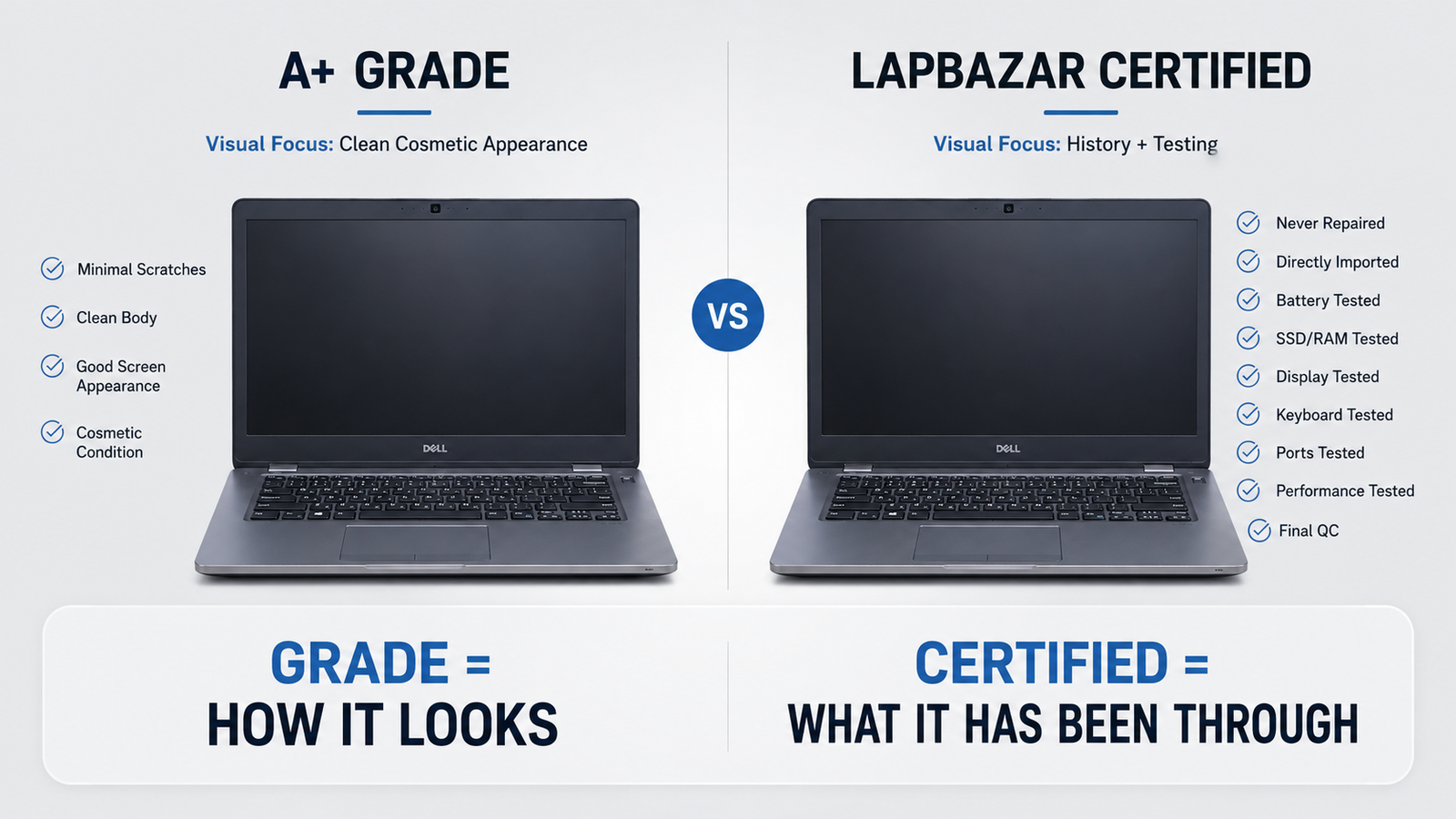
Grading describes appearance. Grade A and A+ mean minimal cosmetic wear — few or no visible scratches, a clean body, a screen without obvious marks. Grade B means visible scuffs or minor dents.
That's the whole scale. As refurbishment guides consistently point out, grading is about looks rather than function . A laptop can be flawless A+ on the outside and have a repaired board underneath. It can also be a scuffed Grade B with completely original hardware and years of reliable life left.
So the two labels answer different questions. Grade tells you how it looks. Certification tells you what it's been through. When you're comparing sellers, a grade on its own tells you almost nothing about whether the machine will still be running next year.
How do you know a used laptop hasn't been repaired?
If you're inspecting a laptop yourself, here's what's worth looking at.
For a complete step-by-step inspection process, use our used laptop buying checklist to check battery health, SSD, display, keyboard, ports, physical condition and performance before you buy.
Open the bottom cover and look at the board. Repair work tends to leave visible traces: solder that looks brighter or duller than its surroundings, a chip whose finish doesn't match the patina of the components around it , or flux residue that was never cleaned off properly. Discolouration or heat marks near a major chip are worth asking about.
Check the screws and the seams. Rounded screw heads, missing screws, or a bottom cover that doesn't sit flush usually mean the machine has been opened more than once.
Then look at behaviour rather than appearance. Run the laptop under load for twenty minutes and watch what happens. Boards that have been reflowed often behave well when cool and get unstable as heat builds — random restarts, display glitches, or sudden shutdowns.
Be realistic, though. A careful repair can be genuinely hard to spot, and most buyers won't have the machine open in a shop before paying. That's the practical reason to buy from a seller whose sourcing rules exclude repaired units in the first place, rather than relying on catching one yourself.
What happens if something goes wrong after delivery?
Certification reduces risk. It doesn't remove your right to check.
Every LapBazar laptop comes with a 10-day checking warranty , and those ten days are for you to use properly rather than let pass...
If something isn't right, raise it inside the window. The return and refund policy sets out how that works.
Testing before dispatch and checking after delivery are two halves of the same thing. We do the first part so you're not gambling. The second part is still worth doing.
The short version
Three things are worth remembering when you compare used laptops in Pakistan.
Certified usually means repaired — LapBazar Certified means never repaired, with original internal hardware and direct import rather than local lot sourcing. Grade and certification are not the same thing: one describes the body, the other describes the history. And a testing checklist is only as strong as what it disqualifies before testing begins.
If you're weighing up a specific model and want to know exactly what was found during its inspection, ask us. We'd rather answer that before you buy than after.
Browse LapBazar Certified laptops in stock — or send us your budget and what you'll be using the laptop for, and we'll tell you honestly which options make sense.
Once you understand the certification and testing standard, the next step is choosing the right model for your budget and workload. See our best used laptops in Pakistan guide to compare practical Dell, HP and Lenovo options.
[…] a seller whose sourcing rules exclude repaired units in the first place — which is exactly what LapBazar Certified […]